How Does an AC Work? A Simple Guide to the Cooling Cycle
If you’ve ever wondered how does an AC work, you’re not alone — it’s one of those things most of us use every single day without really thinking about. Understanding how does an AC work doesn’t require an engineering degree; it comes down to a clever loop of physics that moves heat from inside your home to the outside. Once you grasp that core idea, everything else — the hissing sounds, the dripping water, the outdoor unit blowing warm air — suddenly makes perfect sense. Let’s walk through the full cooling cycle from start to finish.
Table of Contents
The Big Idea: Moving Heat, Not Creating Cold
The most common misconception about how does an AC work is that it somehow manufactures cold air. It doesn’t. An air conditioner is really a heat-moving machine. It pulls heat energy out of the air inside your room and dumps that heat outside, leaving the indoor air cooler in the process.
Think of it like a refrigerator — because that’s exactly the same technology. Your fridge keeps food cold by moving heat from inside the cabinet to the coils at the back. An air conditioner does the exact same thing on a larger scale, using a continuous loop of refrigerant to shuttle heat from one place to another.
This is why understanding how does an AC work starts with one key phrase: the refrigeration cycle. Everything else — the compressor, the fans, the filters — exists to support that cycle.
The Four Core Components That Make It All Happen
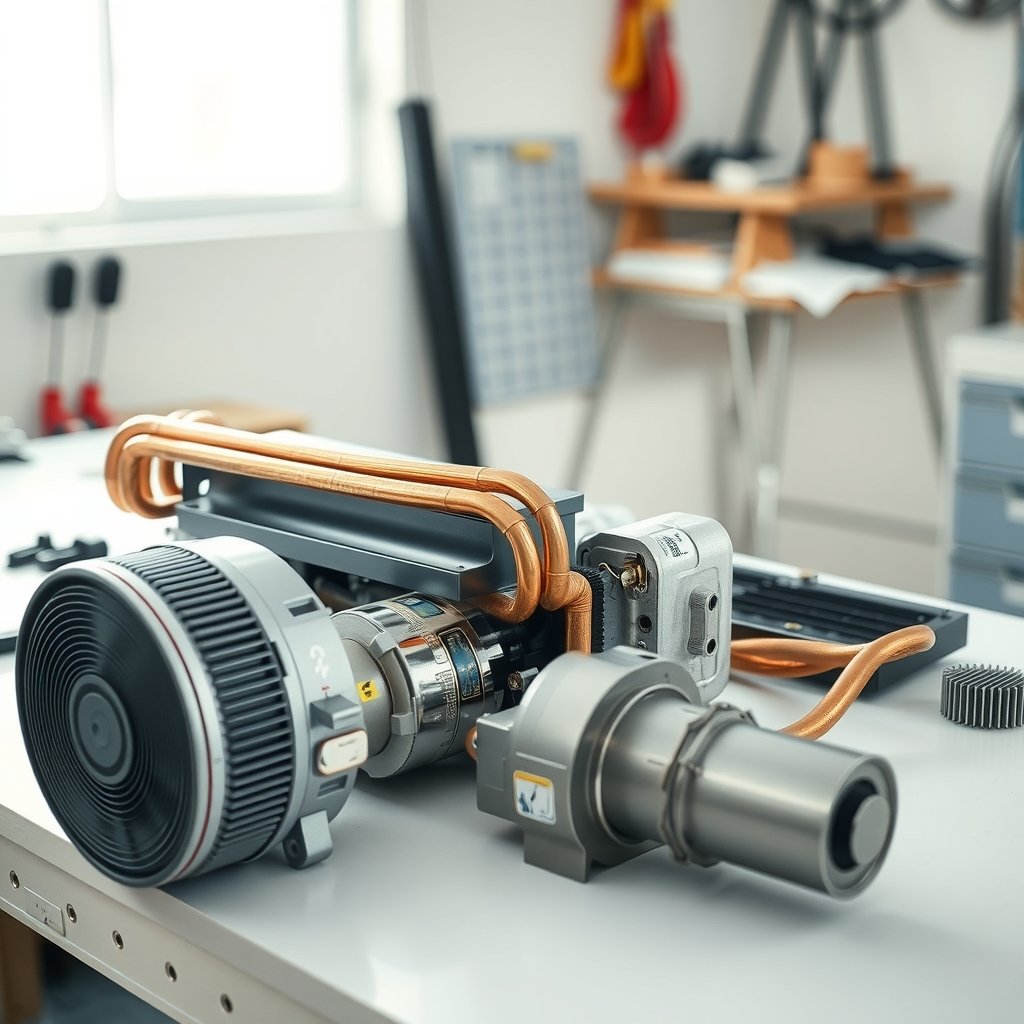
To understand how does an AC work at a component level, you need to know the four main parts of the system and what each one does. They work in sequence, in a closed loop, and they all depend on each other.
| Component | Location | Job in the Cooling Cycle |
|---|---|---|
| Evaporator Coil | Indoor unit | Absorbs heat from room air into the refrigerant |
| Compressor | Outdoor unit | Pressurises the refrigerant to raise its temperature |
| Condenser Coil | Outdoor unit | Releases the absorbed heat to the outside air |
| Expansion Valve | Between indoor and outdoor units | Drops refrigerant pressure so it can absorb heat again |
When someone asks how does an AC work, the honest answer is: these four components passing refrigerant between them in an endless loop. That loop is the cooling cycle.
The refrigerant itself is the working fluid — typically a compound like R-32 or R-410A in modern units. It’s specially engineered to boil and condense at temperatures and pressures that are useful for air conditioning. Without the right refrigerant, none of this works.
The Cooling Cycle, Step by Step
Now let’s trace exactly how does an AC work from the moment you press that remote button to the moment cool air reaches your face.
Step 1 — Warm room air meets the evaporator coil. The indoor blower fan pulls warm air from your room across the evaporator coil. Inside that coil, liquid refrigerant is at a very low pressure, which means it boils at a low temperature — around 5–10 °C. The warm room air (say, 30 °C) has much more heat energy than that boiling refrigerant, so heat flows from the air into the coil. The refrigerant absorbs it and turns into a low-pressure gas. The air that returns to your room has had its heat removed and therefore feels cool.
Step 2 — The compressor does the hard work. The low-pressure gas travels to the compressor, which is essentially a powerful pump in the outdoor unit. The compressor squeezes the gas tightly, raising its pressure and, as a direct result of that compression, its temperature — often to 60–80 °C. This is the stage that uses most of the electricity in the system. It’s also the reason the outdoor unit feels hot to the touch.
Step 3 — The condenser coil dumps the heat outside. The hot, high-pressure gas flows into the condenser coil outside. A second fan blows outdoor air across this coil. Because the refrigerant is now much hotter than the outdoor air, heat flows from the coil to the outside air. The refrigerant cools down and condenses back into a high-pressure liquid. That heat has now left your home permanently — until more heat flows in from the sun, the walls, the occupants, and so on.
Step 4 — The expansion valve resets the cycle. The high-pressure liquid passes through a small expansion valve or metering device. This sudden pressure drop causes the refrigerant’s temperature to fall sharply. It’s now a cold, low-pressure liquid again, ready to re-enter the evaporator coil and absorb more heat from your room. And the cycle repeats — continuously, dozens of times per hour.
What Happens to the Hot Air That Leaves Your Room?
People often ask: if the AC cools my room, where does all that heat actually go? This is a key part of understanding how does an AC work in a real-world setting. The answer is simple — it goes outside, through the condenser coil and the outdoor unit’s fan.
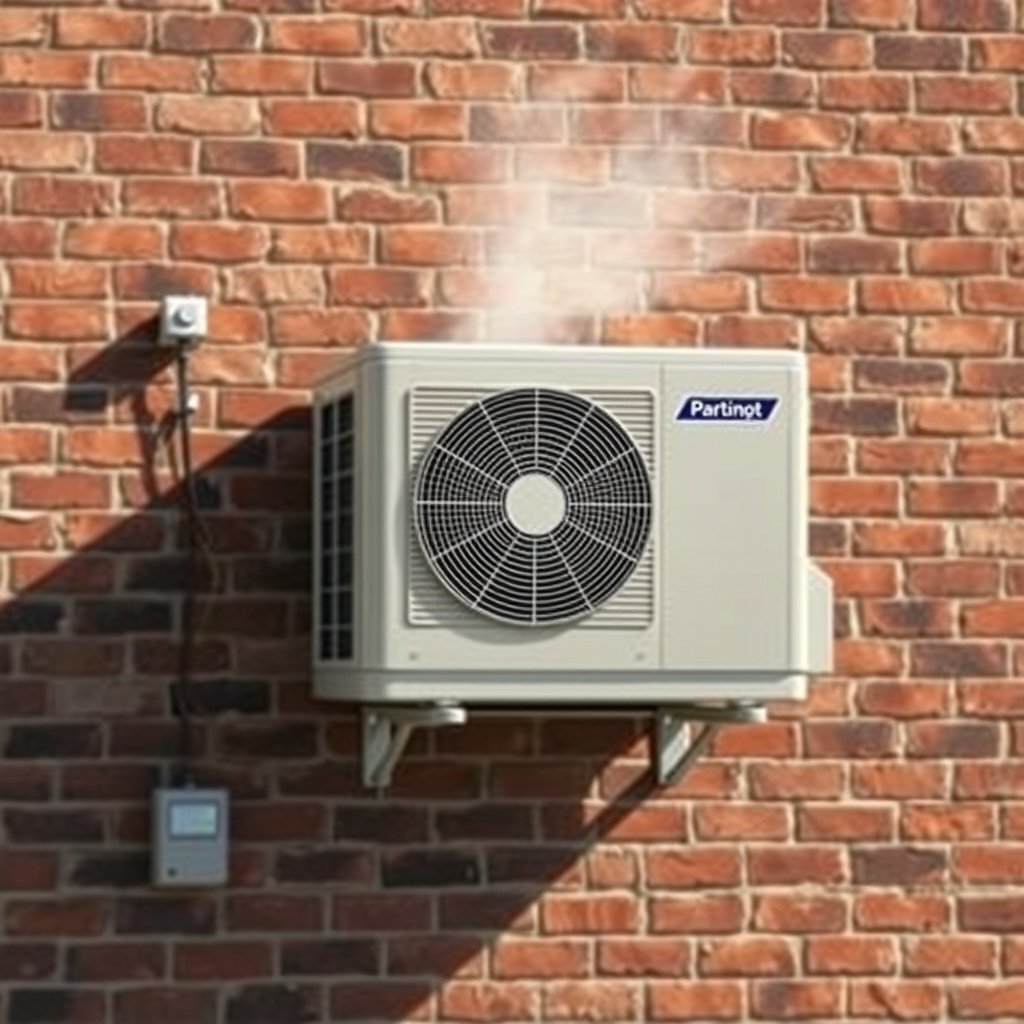
That’s why the area directly around your outdoor unit feels warm on a hot day. Stand behind it and you’ll feel a strong blast of hot air. That hot air is literally the heat that was inside your living room minutes ago. The outdoor unit is working hard to reject all of that thermal energy into the ambient air.
This also explains something important about efficiency: if the outdoor unit is poorly ventilated — say, boxed in by a fence or sitting in a cramped alcove — it can’t reject heat efficiently. The refrigerant stays hotter than it should, the compressor works harder, and your electricity bill climbs. Good airflow around the outdoor unit is not optional; it’s essential to how does an AC work at peak performance.
Keeping the outdoor unit clear of debris, leaves, and dust is one of the simplest maintenance tasks you can do. Similarly, the indoor unit’s filter needs regular cleaning. A clogged filter restricts airflow over the evaporator coil, which means less heat is absorbed and the room cools more slowly. For a practical walkthrough, see our guide on how to clean an AC filter at home.
Humidity: The Hidden Part of How Does an AC Work
Temperature is only half the story. If you’ve ever walked into an air-conditioned room and noticed it feels dry, that’s because how does an AC work includes a dehumidification effect — and that’s actually a feature, not a flaw.
As warm, humid air passes over the cold evaporator coil, moisture in the air condenses on the coil’s surface — the same way a cold glass of water sweats on a humid day. That liquid water drips into a drain pan and exits through a drain pipe, which is why ACs produce liquid water even though they’re not connected to a water supply.
Removing moisture makes the air feel significantly cooler than the thermometer suggests, because human bodies cool themselves by sweating — and sweat evaporates faster in dry air. So understanding how does an AC work means recognising that it’s doing two jobs at once: lowering temperature and lowering humidity. Both contribute to comfort.
In very humid climates, the dehumidification effect can be just as valuable as the temperature drop. Some units even show a separate “dry mode” that prioritises moisture removal over aggressive cooling — useful during mild but sticky weather.
Split AC vs. Window AC: Does the Working Principle Change?
Not at all — and this is worth clarifying, because a lot of people wonder whether how does an AC work differs between a sleek split unit and an old-school window box. The refrigeration cycle is identical in both cases. The only real difference is packaging.
A window AC puts all four components (evaporator, compressor, condenser, expansion valve) into a single box. The front faces your room; the back sticks out the window to dump heat outside. It’s self-contained but noisier, because the compressor vibrates inside the same unit you live with.
A split AC separates the noisy, hot parts (compressor and condenser) into an outdoor unit connected to a quiet indoor unit by copper refrigerant pipes. This is why split ACs are so much quieter indoors — the compressor is outside. The working principle of how does an AC work is exactly the same; the layout is simply divided across two cabinets.
Portable ACs and ducted central air systems also follow the same refrigeration cycle, just adapted to different installation needs. So once you understand how does an AC work in a split system, you essentially understand all of them.
Energy Efficiency and What Affects It
Once you understand how does an AC work, you can start making smarter choices about how you use it. Energy efficiency in an AC comes down to how easily the system can move heat — and several factors either help or hinder that process.
Room insulation. A well-insulated room retains cool air longer and lets less outdoor heat in. This means the AC runs for shorter cycles and uses less electricity. Poor insulation forces the system to work almost continuously.
Set temperature. Every degree you drop the thermostat below around 24 °C forces the system to work harder. Setting it at 24–26 °C is typically the sweet spot between comfort and efficiency in most climates. When you understand how does an AC work, you realise that 18 °C doesn’t cool the room faster — it just means the compressor runs longer.
Filter and coil cleanliness. A dirty evaporator coil or blocked filter reduces airflow, which reduces the amount of heat the system can absorb per cycle. It’s one of the most common reasons an AC gradually seems to lose its cooling power over time.
Refrigerant level. If the system develops a leak, it loses refrigerant and its ability to absorb heat falls sharply. If your AC is blowing warm air despite running, low refrigerant is a likely culprit — and it needs a certified technician to fix, not a DIY top-up.
If you’re trying to reduce running costs, pairing your AC with a good ceiling fan can help significantly — moving air makes a room feel cooler at a higher thermostat setting. Our ceiling fan size guide can help you pick the right fan for your space. You might also find our piece on 7 simple ways to cut your electricity bill this summer worth a read.
Thermostat and Controls: The Brain of the System
Knowing how does an AC work mechanically is only part of the picture. The thermostat and control board are what tell the system when to run, how hard to work, and when to stop.
A conventional (non-inverter) AC uses a simple on/off approach: the compressor runs at full speed until the room reaches the set temperature, then it switches off completely. It restarts when the temperature drifts up again. This cycling causes temperature swings of a couple of degrees and uses a surge of electricity each time the compressor restarts.
An inverter AC’s control board continuously monitors the room temperature and varies the compressor speed to match the actual cooling demand. When the room is nearly at the set temperature, the compressor slows to a trickle rather than switching off. The result is a steadier temperature, less noise, and lower running costs — which is why inverter technology has become the industry standard for new installations.
Smart ACs add Wi-Fi connectivity and app-based scheduling, letting you pre-cool a room before you arrive. The underlying refrigeration cycle — and the answer to how does an AC work — is exactly the same; the smart layer just controls when and how aggressively that cycle runs.
Common Myths About How an AC Works
There’s a surprising amount of misinformation out there, so let’s quickly clear up the most persistent myths when people research how does an AC work.
Myth 1: “Leaving the AC on all day at a higher temperature uses less electricity than cooling down a hot room.” The reality is more nuanced. In a well-insulated space, turning it off and cooling it down later can be more efficient. In a poorly insulated space that heats up rapidly, keeping it at a moderate setting may save energy. It depends heavily on your insulation, climate, and usage pattern.
Myth 2: “Fans cool the air, so using a fan instead of an AC is basically the same.” Fans don’t lower air temperature at all — they move air across your skin to speed up evaporative cooling of sweat. They can make 28 °C feel like 24 °C, but the air itself stays at 28 °C. How does an AC work differently? It actually removes heat energy from the air, lowering the thermometer reading.
Myth 3: “A bigger AC cools faster.” An oversized AC cools the air quickly but short-cycles — it shuts off before it can properly dehumidify the room. You end up with a space that’s cold but clammy. Proper sizing, matched to the room’s square footage and heat load, is critical. This is known as “right-sizing” and it’s one of the first things a good installer will calculate.
Understanding how does an AC work helps you see through these myths and make better decisions about installation, usage, and maintenance.
Final Thoughts
So, how does an AC work? In plain terms: it uses a refrigerant to absorb heat from your room at the evaporator coil, compresses that refrigerant to raise its temperature, dumps the heat outside via the condenser coil, then resets through the expansion valve — over and over, dozens of times per hour. The result is a room that gradually loses heat and feels cool and dry.
Once you understand how does an AC work at this level, you’ll naturally start caring about the things that keep the cycle efficient: clean filters, clear outdoor units, proper refrigerant levels, and sensible thermostat settings. These aren’t just maintenance chores — they’re the direct levers that determine how well and how cheaply your system cools your home.
How does an AC work is ultimately a story about physics: heat flows from hot to cold, and your air conditioner is simply a machine that engineers that flow in a direction that benefits you. Keep it well maintained, choose the right size for your room, and it’ll deliver reliable comfort for many years.
Frequently Asked Questions
How does an AC work without water supply?
An AC doesn’t need a water supply because it cools air using refrigerant, not water. The water you sometimes see dripping from an indoor unit is condensation — moisture from the room air that collects on the cold evaporator coil and drains away. The refrigerant itself is a closed-loop fluid and never needs topping up unless the system develops a leak.
Why does the outdoor unit blow hot air?
That hot air is the heat that was just removed from inside your room. The condenser coil transfers the absorbed heat into the outdoor air via a fan, which is exactly how the cooling cycle is designed to work. The hotter it feels outside the unit, the harder your AC is working to cool your space.
Does an AC filter the air as well as cooling it?
All ACs include at least a basic mesh filter that traps dust, pet hair, and larger particles to protect the evaporator coil. Some premium models add finer filters or activated carbon layers for better air quality. However, standard AC filters are not the same as dedicated air purifiers — they’re primarily there to protect the coil, with air cleaning as a secondary benefit.
How often should an AC be serviced to keep it working properly?
Most manufacturers and HVAC professionals recommend a full service once a year — typically before the peak cooling season. You should clean or rinse the indoor filter yourself every two to four weeks during heavy use. Annual servicing usually includes checking refrigerant levels, cleaning the coils, inspecting electrical connections, and ensuring the drain line is clear. Regular upkeep directly affects efficiency and the lifespan of the unit. You can learn more in our guide on how to clean an AC filter at home.