What Is Inverter AC Technology and How Does It Save Power?
If you’ve ever shopped for an air conditioner and seen the word “inverter” plastered across the box, you’ve probably wondered: what is inverter AC technology, and does it actually matter? The short answer is yes — it matters a lot, especially for your electricity bill. What is inverter AC technology, really? It’s a smarter way for an air conditioner’s compressor to operate, and understanding it can help you make a much better buying decision. In this guide, we break down exactly how it works, why it saves power, and whether it’s the right choice for your home.
Table of Contents
What Is Inverter AC Technology, Exactly?
At its core, what is inverter AC technology comes down to one component: the compressor. In a traditional (non-inverter) air conditioner, the compressor works in a simple on/off cycle. It runs at full power until the room hits the target temperature, then it completely shuts off. When the room warms up again, it restarts at full power. This constant stopping and starting wastes energy and puts mechanical stress on the unit.
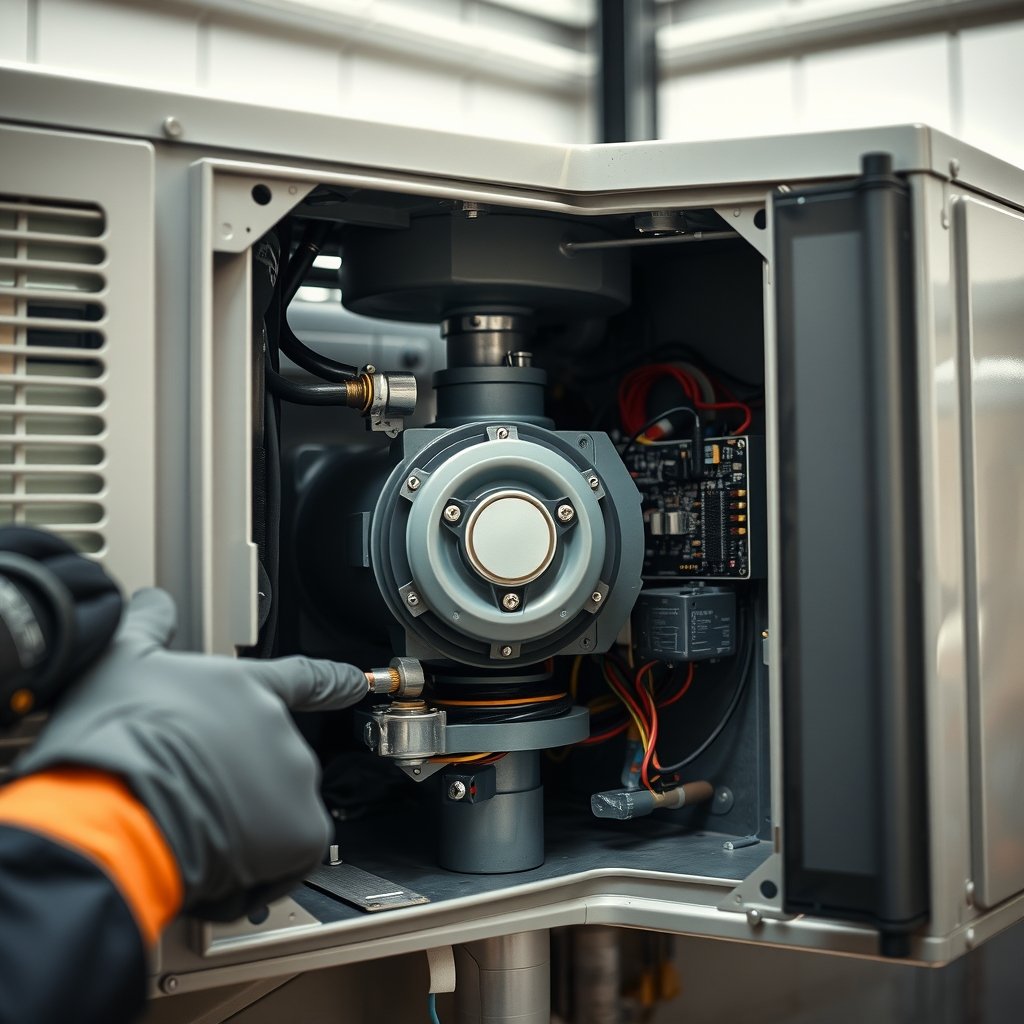
What is inverter AC technology, by contrast, is a system where the compressor never fully switches off. Instead, it continuously adjusts its speed — running fast when the room needs rapid cooling and slowing right down once the target temperature is reached. Think of it like driving a car: constant hard braking and acceleration burns more fuel than maintaining a smooth, steady speed.
The word “inverter” itself refers to the electronic circuit that controls the motor speed by converting the power supply’s frequency. This variable-frequency drive (VFD) is the technical heart of what is inverter AC technology, and it’s what makes the whole system so efficient.
How Does an Inverter AC Actually Save Power?
Understanding what is inverter AC technology helps you see exactly where the savings come from. The biggest drain on electricity in any air conditioner happens during compressor start-up. A motor pulling full load from a standing stop draws a large surge of current — sometimes two to three times its normal running current. A non-inverter AC does this repeatedly throughout the day.
An inverter compressor avoids that surge entirely. Because it ramps up gradually and then throttles back, it draws only as much power as the room actually needs at any given moment. On a mild spring day, the compressor might run at 30–40% capacity for hours, consuming a fraction of what a non-inverter unit would use. On a scorching summer afternoon, it ramps up to full output — but it still avoids the wasteful restart surges.
Energy efficiency studies published by bodies such as the International Energy Agency consistently show that inverter air conditioners can use significantly less electricity than fixed-speed models for equivalent cooling — with real-world savings depending heavily on climate, room insulation, and usage patterns. The savings are most dramatic in climates with long cooling seasons, which is exactly why what is inverter AC technology has become the dominant standard in countries like Japan, South Korea, and increasingly across South and Southeast Asia.
If you’re already looking for other ways to trim your power costs, check out these 7 Simple Ways to Cut Your Electricity Bill This Summer for practical tips that work alongside an efficient AC.
Inverter AC vs. Non-Inverter AC: A Clear Comparison
People often ask us whether the premium price of an inverter model is genuinely justified. Here’s a side-by-side look at the key differences so you can decide for yourself.
| Feature | Inverter AC | Non-Inverter AC |
|---|---|---|
| Compressor operation | Variable speed (continuous) | Fixed speed (on/off) |
| Energy consumption | Lower — adjusts to load | Higher — always full power |
| Temperature stability | Very consistent | Can fluctuate slightly |
| Noise level | Quieter at low loads | Noisy on/off cycling |
| Upfront cost | Higher | Lower |
| Long-term running cost | Lower | Higher |
| Compressor lifespan | Generally longer | More wear from cycling |
What is inverter AC technology’s biggest weakness? The upfront purchase price. Inverter models can cost noticeably more than equivalent non-inverter units. However, in regions where electricity is expensive or where air conditioners run for many hours a day, the electricity savings typically offset that higher purchase price within a few years of normal use.
For small rooms in particular, inverter technology shines because the compressor spends most of its time at low speed, maximising efficiency. If you’re exploring the best brands available in your market, our guide to the Best Inverter AC Brands in Bangladesh for Small Rooms is a great place to start.
What Is Inverter AC Technology’s Effect on Comfort?
Energy savings aside, what is inverter AC technology doing for the people sitting in the room? Quite a lot, actually. Because the compressor modulates its speed rather than cycling on and off, the room temperature stays remarkably stable. With a non-inverter unit, you might notice the room getting slightly warmer before the compressor kicks back in — a small but real comfort dip that inverter systems avoid.
Noise is another factor worth talking about. The on/off clunk of a traditional compressor is familiar to anyone who’s tried to sleep in a room with an older AC. Inverter compressors, running at reduced speeds most of the night, are significantly quieter. That consistent, low hum is far less disruptive than a motor that jolts on at full power every few minutes.
Humidity control also improves. When what is inverter AC technology keeps the compressor running continuously at a low speed, it draws moisture from the air more steadily than a unit that only runs at full blast. The result is a room that feels less clammy, even when the temperature setting is the same.
Key Components That Make Inverter Technology Work
Knowing what is inverter AC technology means looking at the hardware behind the efficiency. There are three main components working together.
1. The Variable-Frequency Drive (VFD): This electronic board converts the incoming AC power to DC and then back to AC at a variable frequency. By changing the frequency, it directly controls the speed of the compressor motor. The VFD is the brain of what is inverter AC technology.
2. The Variable-Speed Compressor: Unlike a fixed-speed compressor that only knows “on” and “off,” this compressor can operate across a wide range of speeds. High-quality inverter compressors — like those using BLDC (brushless DC) motors — are especially smooth and durable. Understanding what is inverter AC technology properly means appreciating how much engineering has gone into these motors.
3. Smart Sensors and Controllers: Modern inverter air conditioners use thermistors and room sensors to constantly read the ambient temperature and feed that data back to the VFD. The system recalculates the ideal compressor speed multiple times per minute. This closed-loop control is what allows what is inverter AC technology to maintain such precise, efficient comfort.
Some premium models also incorporate AI-based load prediction — the unit learns your household’s cooling patterns and anticipates demand rather than just reacting to it. This takes what is inverter AC technology a step further toward genuine smart-home integration.
Is Inverter AC Technology Worth the Extra Cost?
This is the question most buyers land on after understanding what is inverter AC technology. The honest answer depends on three factors: how many hours per day you run the AC, how expensive your local electricity is, and how long you plan to keep the unit.

If you live somewhere with a long, hot summer and you run the AC for eight or more hours a day, what is inverter AC technology will almost certainly pay for the price difference through lower monthly bills — often within two to three years. If you use the AC only occasionally on the hottest days of the year, the payback period stretches out and the financial case weakens, though the comfort and noise benefits remain.
Build quality is another angle. Because what is inverter AC technology puts less mechanical stress on the compressor — no brutal restart surges, no full-speed-only operation — inverter units tend to have longer service lives. Fewer compressor replacements over a decade of use is a real saving that doesn’t show up in the monthly electricity bill but absolutely shows up over time.
The U.S. Department of Energy’s guidance on room air conditioners recommends choosing higher-efficiency models whenever practical, noting that the operational savings compound significantly over the life of the appliance. That recommendation applies squarely to what is inverter AC technology.
It’s also worth pairing a high-efficiency AC with other good habits. Good insulation, shading windows from direct sun, and keeping filters clean all help the unit work less hard. Speaking of filters, our guide on How to Clean an AC Filter at Home walks you through a simple routine that keeps any AC — inverter or not — running at peak efficiency.
What to Look for When Buying an Inverter AC
Now that you understand what is inverter AC technology, here’s what to check when you’re actually standing in a showroom or browsing online.
Energy Star Rating: In most markets, air conditioners are rated on a star or SEER (Seasonal Energy Efficiency Ratio) scale. A higher SEER or more stars means better efficiency. Look for the highest rating your budget allows — this directly reflects what is inverter AC technology performing at its best.
Compressor Type: BLDC (brushless DC) inverter compressors are quieter and more efficient than older AC-motor-based inverter designs. When a salesperson explains what is inverter AC technology in their product, ask specifically about the compressor motor type.
Refrigerant Type: Modern inverter ACs should use R-32 or R-410A refrigerant, not the older R-22 (Freon), which is being phased out globally due to its environmental impact. R-32 is currently the most eco-friendly widely available option. The UN Environment Programme’s work on sustainable cooling highlights why refrigerant choice matters alongside efficiency.
Smart Features: Wi-Fi connectivity, scheduling, and integration with smart home platforms are increasingly standard on mid-range and premium inverter models. These features let you pre-cool your room before you arrive — a genuinely useful way to combine convenience with energy management.
Warranty on Compressor: Because what is inverter AC technology centres on the compressor, pay close attention to the compressor warranty. Reputable brands typically offer five to ten years of coverage on the compressor specifically. That’s a meaningful signal of confidence in the technology’s durability.
Pairing your AC choices with other comfort decisions in your home is smart. For instance, the right ceiling fan can reduce how hard your AC needs to work. Our guide on How to Choose the Right Ceiling Fan Size for Your Room helps you get that combination right.
Final Thoughts
What is inverter AC technology, in plain terms? It’s the difference between a compressor that hammers away at full power and then stops dead, and one that runs smoothly, efficiently, and continuously at whatever speed your room actually needs. It saves electricity, reduces noise, extends the life of the unit, and keeps your room at a more consistent temperature — all at once.
What is inverter AC technology worth to you personally will depend on your usage habits, your climate, and your budget. But for anyone running an AC for more than a few hours a day in a warm climate, the case is compelling. The higher upfront cost is a real consideration, not something to dismiss — but so is the ongoing electricity saving that starts from day one of operation.
We think what is inverter AC technology represents one of the clearest, most practical upgrades available in home comfort right now. If you’re in the market for a new air conditioner, make it a serious part of your buying checklist. Your future electricity bills will thank you.
Frequently Asked Questions
Does an inverter AC really save electricity compared to a regular AC?
Yes. What is inverter AC technology designed to do is exactly this — save electricity by running the compressor at variable speeds instead of cycling it on and off at full power. Real-world savings vary depending on climate, room size, and usage hours, but the efficiency advantage is well-established and consistent across brands.
Can I use an inverter AC in a small room?
Absolutely. In fact, small rooms are where what is inverter AC technology performs particularly well, because the compressor spends most of its time ticking over at low speed after the room reaches the target temperature. Just make sure you choose the right BTU rating for the room’s actual size.
Is inverter AC technology reliable long-term?
Generally, yes. Because what is inverter AC technology avoids the repeated start-up stress that wears out traditional compressors, inverter units tend to have longer service lives. The electronic components (VFD board) are the most likely point of failure over time, but most quality brands back these with solid warranty coverage.
What’s the difference between a 5-star inverter AC and a 3-star inverter AC?
Both use what is inverter AC technology, so both benefit from variable-speed efficiency. The star rating reflects how efficiently that specific model converts electricity into cooling. A 5-star unit uses less electricity per unit of cooling than a 3-star unit, so it costs more upfront but saves more each month. In high-usage scenarios, the 5-star model almost always pays the difference back over time.