How to Choose the Right Ceiling Fan Size for Your Room
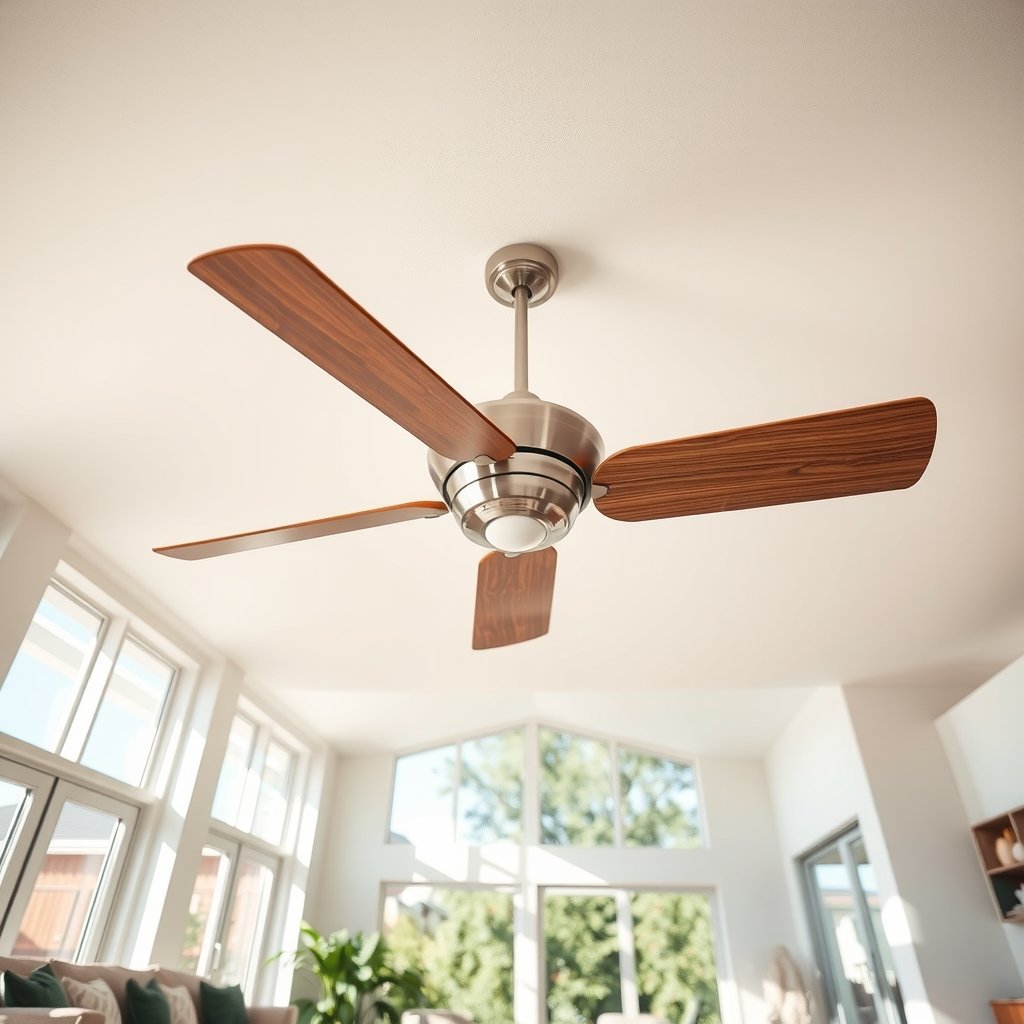
Choosing the right Ceiling Fan size is one of the most practical decisions you’ll make for any room in your home. Get it right, and you’ll enjoy consistent airflow, lower energy bills, and a fixture that looks proportionate and purposeful. Get it wrong, and even the most expensive Ceiling Fan will feel either overwhelmed by the room or comically oversized. In this guide, we walk through every measurement, formula, and real-world consideration you need to pick the perfect Ceiling Fan for your space — from a cozy bedroom to an open-plan living area.
Key Takeaways
- Blade span is the single most important spec when sizing a Ceiling Fan — match it to your room’s square footage.
- Ceiling height determines whether you need a flush-mount (hugger), standard, or downrod Ceiling Fan — there is a clear formula for each.
- Airflow (measured in CFM) matters as much as blade diameter — a bigger fan running slowly often moves more air than a small fan at full speed.
- Room shape, obstructions, and furniture layout can all shift your sizing decision by one size category.
- Always measure twice before buying — returning a large Ceiling Fan is inconvenient and sometimes impossible if you’ve already installed it.
Table of Contents
Why Ceiling Fan Size Matters More Than You Think
A Ceiling Fan that’s too small for a room simply can’t circulate enough air to make a noticeable difference in comfort. You’ll hear the motor working hard, notice hot or cold pockets near the walls, and probably crank up the air conditioning anyway — defeating the whole point. Conversely, a Ceiling Fan that’s too large can create a wind-tunnel effect, feel visually oppressive in a smaller room, and produce more noise than it should at lower speeds.
The good news is that sizing a Ceiling Fan isn’t complicated once you understand the two or three numbers that actually matter. Room square footage, ceiling height, and blade span work together in a straightforward way — and we’ll show you exactly how.
The Ceiling Fan Blade Span Formula: Matching Fan to Room Size
Blade span — the diameter of the circle the blades sweep through — is the primary sizing metric for any Ceiling Fan. The industry-standard guide below is a reliable starting point for most rooms. Keep in mind that these are recommendations, not rigid rules; a narrow room can sometimes benefit from a slightly smaller blade span even if the square footage is high.

| Room Size (sq ft) | Recommended Blade Span | Typical Use Case |
|---|---|---|
| Up to 75 sq ft | 29–36 inches | Small bathroom, walk-in closet |
| 76–144 sq ft | 36–42 inches | Small bedroom, home office |
| 145–225 sq ft | 44–50 inches | Master bedroom, mid-size living room |
| 226–400 sq ft | 52–56 inches | Large living room, open dining area |
| Over 400 sq ft | 60–72 inches (or multiple fans) | Great room, covered patio, barn |
To use the table, simply multiply your room’s length by its width to get square footage. A 12 × 14 ft bedroom is 168 sq ft — right in the 44–50-inch blade-span range. If your room is long and narrow (say, 8 × 20 ft), lean toward the smaller end of the recommended range so the Ceiling Fan doesn’t feel too close to the side walls.
For rooms over 400 square feet, a single Ceiling Fan is often not enough. Two 52-inch fans placed roughly one-third of the way in from each end of the room will cover the space far more evenly than one giant 72-inch unit crammed in the center.
How Ceiling Height Changes Everything
Blade span is only half the equation. Ceiling height determines which mounting style your Ceiling Fan needs, and it also affects how well the fan circulates air. The blades of a Ceiling Fan should ideally sit between 7 and 9 feet above the floor for optimal airflow — close enough to push air effectively, high enough to clear anyone walking beneath it safely.
Flush-Mount (Hugger) Ceiling Fans
If your ceiling is 8 feet or lower, a flush-mount Ceiling Fan — also called a hugger — mounts the motor housing directly against the ceiling with no downrod. This keeps the blades at a safe and comfortable height. The trade-off is slightly reduced airflow efficiency because the blades have less space to breathe above them, but it’s the right practical choice for low-ceiling rooms.
Standard Mount and Downrod Ceiling Fans
Ceilings between 8 and 9 feet typically work well with a short downrod (3–5 inches). For ceilings 9 feet and above, the downrod length should increase by roughly 6 inches for every additional foot of ceiling height beyond 8 feet. So a 10-foot ceiling calls for about a 6-inch downrod, a 12-foot ceiling for an 18-inch downrod, and so on. Many Ceiling Fan brands publish a downrod-length chart in their installation guides — it’s worth consulting it for your specific model.
Vaulted or angled ceilings require a Ceiling Fan with an angled canopy or an angle-mount adapter. Standard mounting hardware won’t sit flush on a sloped surface, which can cause wobble, noise, and even a safety risk over time.
Understanding CFM: The Airflow Number That Really Counts
Once you’ve matched blade span and mounting height, the next spec worth looking at is CFM — Cubic Feet per Minute. This number tells you how much air a Ceiling Fan actually moves per minute at its highest speed. A higher CFM means more effective cooling and ventilation for the same room size.
As a general benchmark, a Ceiling Fan for a standard bedroom (around 150 sq ft) should move at least 4,000 CFM. A large living room (300+ sq ft) benefits from a Ceiling Fan rated at 6,000 CFM or above. For covered outdoor patios or large great rooms, look for 7,000 CFM or higher.
CFM alone doesn’t tell the whole story, though. Efficiency matters too. The Energy Star program certifies ceiling fans that deliver a minimum CFM-per-watt ratio, meaning they move more air while consuming less electricity. If running costs matter to you, check for that certification before buying.
Blade pitch — the angle of the blades relative to horizontal — also influences CFM. Most residential Ceiling Fan blades are pitched between 12° and 15°. A steeper pitch moves more air but requires a more powerful motor. A Ceiling Fan advertised with a very steep pitch but a small motor will often wobble or wear out faster than one where the motor and pitch are properly matched.
Room Shape, Layout, and Other Sizing Considerations
Square footage and ceiling height give you a solid starting point, but they don’t account for everything. The shape of a room, its furniture layout, and any architectural features can all nudge your Ceiling Fan choice in one direction or another.
Clearance from Walls and Obstructions
The blades of a Ceiling Fan should maintain at least 18 inches of clearance from any wall, beam, or other fixed obstruction. This isn’t just an aesthetic preference — it’s a safety guideline. In a 10 × 10 ft room (120 sq ft), that 18-inch rule on each side means only a 6-foot (72-inch) center zone is truly safe — which points you toward a 42-inch fan rather than the largest you could technically fit by square footage alone.
Ceiling beams are another common issue. If your room has exposed beams, check that the blade path of your chosen Ceiling Fan won’t clip them. Sometimes centering the fan between two beams (rather than directly under one) is the smarter move.
Open-Plan and Multi-Zone Spaces
Open-plan areas — where the kitchen flows into the dining area into the living room — rarely have a single obvious center point for a Ceiling Fan. In these spaces, it usually makes more sense to install two or even three well-placed fans than to pick one enormous unit. A Ceiling Fan over the dining table, another over the seating area, and possibly a third near the kitchen island creates even, targeted airflow without any single fan looking out of scale.
Outdoor and Semi-Outdoor Spaces
If you’re installing a Ceiling Fan on a covered porch, lanai, or pergola, you need a fan specifically rated for outdoor or damp use. The UL damp or UL wet rating tells you how much moisture exposure the fan can handle. A damp-rated Ceiling Fan is fine for a covered space that doesn’t receive direct rain. A wet-rated fan is needed if the blades could get rained on directly. Never install an indoor-only Ceiling Fan outside — the motor and blade materials won’t hold up, and it poses a shock hazard.
Common Ceiling Fan Sizing Mistakes (and How to Avoid Them)
Even experienced homeowners fall into a few predictable traps when sizing a Ceiling Fan. Here are the ones we see most often — and what to do instead.
Mistake 1 — Sizing by looks alone. A large, dramatic Ceiling Fan can look stunning in a showroom or in a product photo, but if the room is only 120 sq ft, a 52-inch fan will dominate the space visually and create too much draft at low speeds. Always run the numbers before you fall in love with a model.
Mistake 2 — Ignoring ceiling height. Installing a standard-mount Ceiling Fan on a low 7.5-foot ceiling is a head-clearance problem waiting to happen. And hanging a hugger fan on a 12-foot ceiling drastically reduces its ability to push air down where people actually feel it. Match the mount to the height.
Mistake 3 — Overlooking motor quality. Two ceiling fans with identical blade spans can have very different performance profiles depending on the motor. A DC (direct current) motor Ceiling Fan is generally quieter, more efficient, and longer-lasting than an AC motor fan of the same size. The U.S. Department of Energy notes that ceiling fans with efficient motors can reduce cooling costs noticeably when used in conjunction with air conditioning.
Mistake 4 — Skipping the installation check. Before you buy, verify that your ceiling electrical box is rated to support a fan. A standard light-fixture box is not strong enough for most Ceiling Fan units. You’ll need a fan-rated box, which can usually be installed as a relatively simple upgrade — but it’s something to budget for if it’s not already in place.
Ceiling Fan Direction: Summer vs. Winter Settings
Once your Ceiling Fan is correctly sized and installed, there’s one more setting most people overlook: the blade rotation direction. Most ceiling fans have a small switch (or an app setting on smart models) that reverses the blade direction.
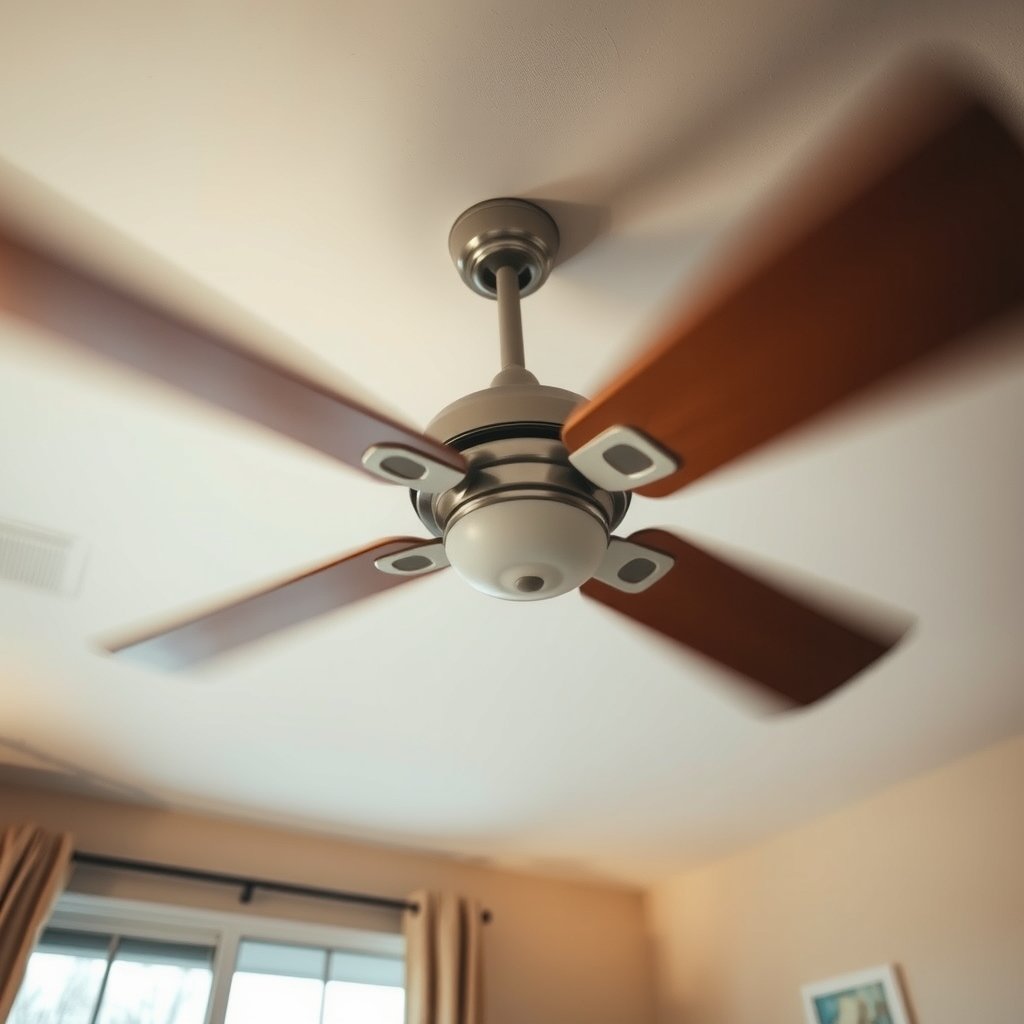
In summer, set your Ceiling Fan to spin counter-clockwise (when viewed from below). This pushes air straight down, creating the wind-chill effect that makes a room feel several degrees cooler without changing the actual temperature.
In winter, reverse the direction to clockwise. The Ceiling Fan then draws cool air upward from floor level and pushes the warm air that naturally pools near the ceiling back down along the walls. This can meaningfully reduce heating costs in rooms with high ceilings.
It sounds simple — because it is. But it’s one of the most overlooked ways to get maximum value from a Ceiling Fan year-round.
Frequently Asked Questions
What size Ceiling Fan do I need for a 12×12 room?
A 12×12 ft room is 144 sq ft, which puts you right at the top of the 36–42 inch blade-span range. We’d recommend a 42-inch Ceiling Fan for that size room — it’ll circulate air evenly without overwhelming the space. If the ceiling is 9 feet or higher, choose a model with an appropriate downrod to keep the blades at the ideal 7–9 ft height from the floor.
Can I put a large Ceiling Fan in a small room?
Technically yes, but it’s not advisable. A Ceiling Fan that’s too large for a room creates an uncomfortable draft even at low speeds, and the blades may not maintain safe clearance from the walls. Stick to the blade-span guidelines in the table above — they exist for good practical reasons, not just aesthetics.
Does a Ceiling Fan actually save energy?
A Ceiling Fan doesn’t cool the air — it cools the people in the room through the wind-chill effect. That means it only saves energy when people are present and you raise the thermostat setting accordingly. Turn your Ceiling Fan off when you leave the room, and you’ll see a real reduction in air-conditioning workload and energy bills over a full season.
How do I know if my electrical box can support a Ceiling Fan?
Look for a label or stamp on the box that says “Acceptable for Fan Support” or lists a weight rating (most fans weigh between 15 and 50 lbs). If you don’t see that marking, assume the box is for lights only and replace it with a fan-rated box before installing your Ceiling Fan. When in doubt, a licensed electrician can confirm it in minutes.
Final Thoughts
Sizing a Ceiling Fan correctly comes down to three numbers: room square footage (which guides blade span), ceiling height (which determines mounting style), and CFM (which confirms the fan can actually move enough air). Get those three things right, and your Ceiling Fan will keep any room comfortable across every season. Take the time to measure your room carefully, check the wall-clearance rule, and verify your electrical box before you buy — small preparation steps that save a lot of hassle later. A well-chosen Ceiling Fan is one of the most cost-effective comfort upgrades a home can have, and now you have everything you need to pick the right one.